
Save 36%


Please sign in so that we can notify you about a reply
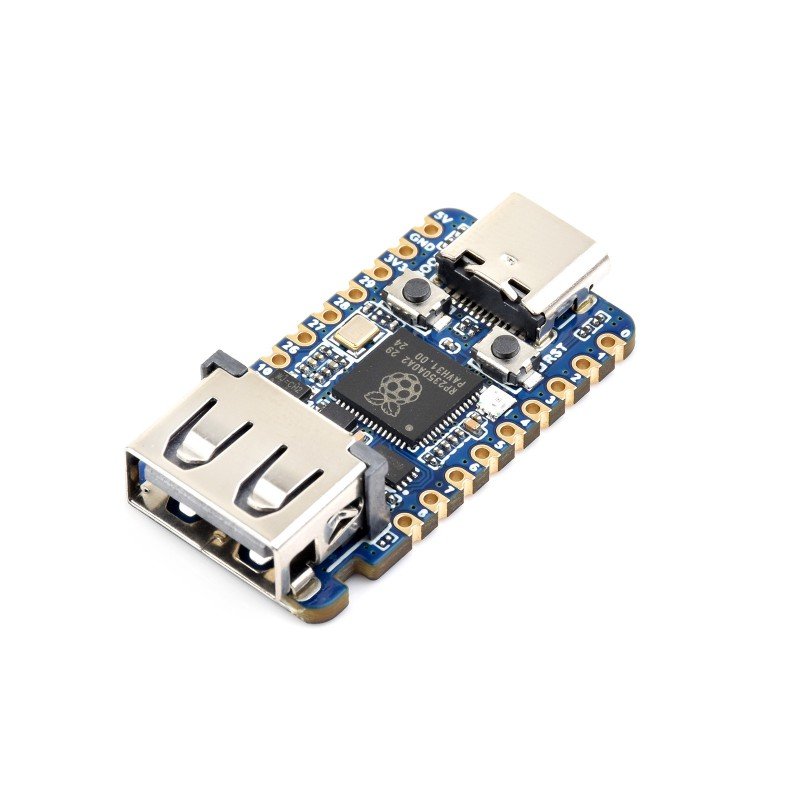
Waveshare RP2350_A USB Mini Development Board, Based On Raspberry Pi RP2350A Dual-core & Dual-architecture Microcontroller, 150MHz Operating Frequency
Description:
- RP2350-USB-A Mini Development Board
- Based On Raspberry Pi RP2350A, Onboard USB Ports
- Castellated module, suitable for SMD applications
Board specifications:
- RP2350A microcontroller chip designed by Raspberry Pi in the United Kingdom
- Adopts unique dual-core and dual-architecture design: dual-core Arm Cortex-M33 processor and dual-core Hazard3 RISC-V processor, flexible clock running up to 150 MHz
- 520KB of SRAM, and 2MB of onboard Flash memory
- Type-C connector, keeps it up to date, easier to use
- Castellated module allows soldering directly to carrier boards
- USB 1.1 with device and host support
- Onboard 1x USB Type A expansion port via PIO, compatible with USB 2.0/1.1 transmission
- Low-power sleep and dormant modes
- Drag-and-drop programming using mass storage over USB
- Adapting 15 × multi-function GPIO pins
- 2 × SPI, 2 × I2C, 2 × UART, 4 × 12-bit ADC, 14 × controllable PWM channels
- Accurate clock and timer on-chip
- Temperature sensor
- Accelerated floating-point libraries on-chip
- 12 × Programmable I/O (PIO) state machines for custom peripheral support
15 × multi-function GPIO pins
Configurable pin function, allows flexible development and integration

What's On Board:

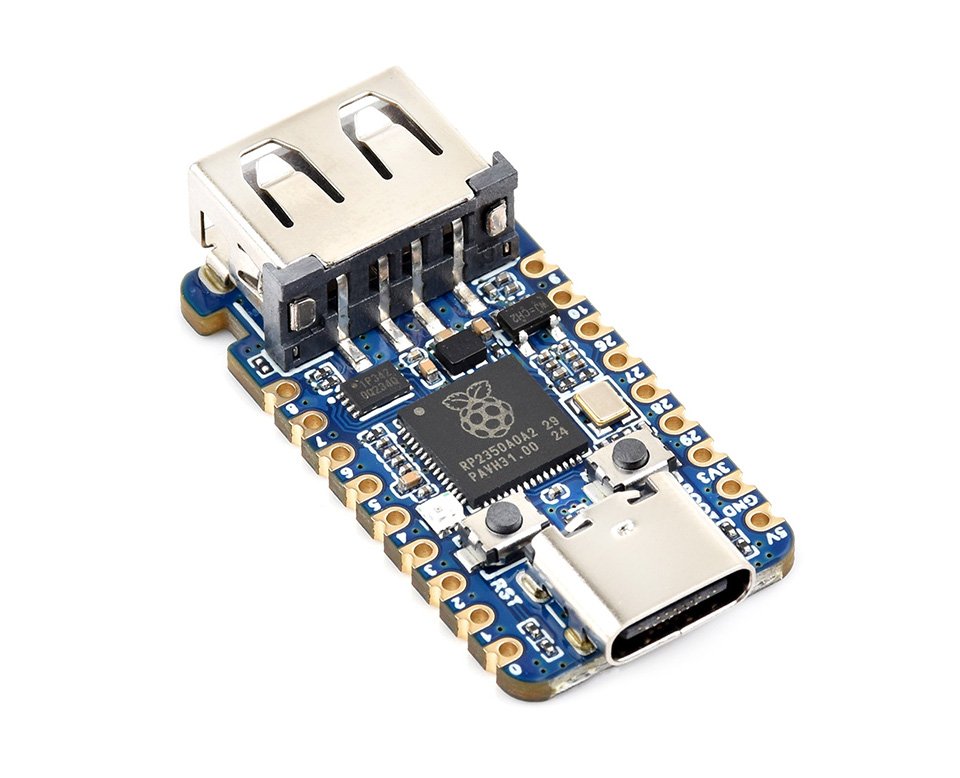
- USB 2.0 Type A connector: Supports USB host or device via PIO
- BOOT button: Press it when resetting to enter download mode
- RESET button
- RP2350A: Dual-core and dual-architecture design, up to 150 MHz operating frequency
- WS2812: cool RGB LED
- RT9013-33GB: 500mA LDO regulator, low noise, ultra-fast response
- W25Q16JVUXIQ: 2MB NOR-Flash
- USB Type-C connector: for programming, USB 1.1 with device and host support
Compatible with iPhone USB Exploit
Targeted Hardware: Apple A12 and A13 chips, alongside S4/S5 processors.
Affected Models: iPhone XS, XR, 11 lineup, iPhone SE (2nd gen), select iPads, and Apple Watch Series 4 and 5.
How Usbliter8 Works:
Physical Requirement: Requires direct physical access and a wired connection via a dedicated microcontroller (such as an RP2350-based board) while the device is in DFU mode.
Boot-Chain Compromise: Executes malicious code in under two seconds during startup, overriding standard security checks before the operating system boots.
Unpatchable Nature: Because the vulnerable code is hardwired into the immutable silicon SecureROM during manufacturing, Apple cannot fix it through standard software updates. Upgrading to newer hardware (A14 chips or later) is the only complete mitigation.
No reviews found